New York State Unemployment Insurance Help
6 years ago
Double-Take Software's blog dedicated to employee/leadership development.
One of the most powerful things a leader can do to build a strong organizational culture is to just be himself. For us lucky Double-Take employees, we have a great example at the top of our organization.
Four or five times a year, Double-Take Software CEO Dean Goodermote makes a drastic wardrobe change to entertain his clients. His necktie is replaced with love beads. His suit is replaced with a tight, sleeveless T-shirt, capri pants and bright orange-and-blue sneakers – an homage to the company colors.
Cluster-Funk at Tech Ed from DBTK on Vimeo.
We all do it. It's a curse of being human and unfortunately no matter how hard we try be perfect, hardworking, efficient workerbees who come in to do the job and then go home...
Our emotions get the best of us. At some point or another, life takes it toll and we react. We blow steam in the office, go off on a rant during lunch, mutter under our breath. It happens. We're human. I get that.
But are our reactions appropriate? Justified? ...Expected? Even better: are your reactions INTENTIONAL? Do they further your position?
Consider the last time your emotions got away from you and you reacted in a way that didn't serve you or the organization best:
Next time you have to react, press PAUSE. If not PAUSE, hit the 5-SECOND DELAY. Give yourself some time to let the rational thinking section of your brain dissect how you feel vs. how you're going to react.
This type of emotional control takes practice. A lot of it. Start by asking these questions in real time as you feel your emotions getting the better of you, before you react. With practice and a few deep breaths, you may be able to hit the pause button and become more intentional with the emotions you use in the workplace -- they'll push your agenda much further than flying off the handle ever will.
Labels: credibility, culture, emotions, leadership, respect, trust
During tough economic times, you'll hear rumblings about "employee engagement" from various levels of an organization. Employee engagement is the hot buzz word that just won't go away, primarily because it does have an impact on how well (or poor) a company comes out of a downturn.
However, while everyone is buzzin' about employee engagement, how many of you actually know what drives, creates, and sustains it?? If you can name at least 3 *without peeking*, you get an A for the day.
Get a little deeper on what drives employee engagement:
Now, more than ever, your team, organization and peers need you to be positive and forward-looking. The best way to begin looking ahead is to begin with yourself.
It's spring. The time of growth, rejuvenation, and excitement for the future. Let's start fresh - today! Consider where you are at in your leadership journey at this moment with these questions:
Here & Now
Labels: leadership
Marshall Goldsmith is the author of the Wall Street Journal bestseller Succession: Are You Ready? as well as the New York Times and Wall Street Journal bestseller What Got You Here Won't Get You There, a Harold Longman Award winner for Business Book of the Year. He can be reached at Marshall@MarshallGoldsmith.com, and he provides his articles and videos online at MarshallGoldsmithLibrary.com.
Read the rest of the article here.
I was recently teaching in a seminar for MBA students at the University of California at Berkeley's Haas School of Business. A young second-year student seemed anxious to talk with me. He finally asked: "I have read your book, What Got You Here Won't Get You There. In the book you talk about classic challenges faced by your clients. I noticed that you never discuss self-confidence problems. How do you deal with your client's self-confidence problems?"This was a great question. It made me realize that I rarely encounter self-confidence problems in my work with CEOs and potential CEOs. It is almost impossible to make it to the top level in a multibillion-dollar corporation if you do not believe in yourself. On the other hand, I am frequently asked to speak at business schools (in fact five this month), and I have noticed that students in my seminars often want to talk about it.
Labels: books, confidence, credibility, failure, leadership, productivity, respect, transparency, trust
We live in a world of dramatic, tumultuous, and unpredictable change—change that is wiping out time-honored businesses and long-standing institutions and ushering in unprecedented opportunities for creative individuals and entrepreneurial organizations. So pervasive is change today that it has redefined our first task: The job is no longer figuring out how to win at the game of work and life; the job is figuring out the new rules of the game.
Labels: books, change, failure, fun 'n games, innovation, leadership, learning, learning opportunities, managing, recession, relationships, transparency, trust
I subscribe to RSS feeds for an unknown number of employee development and leadership blogs. It's my connection to what's going on in the field, who's who, what's changing, and what is staying the same because it's tried and true.
During on of my quick scans thru the feeds, I found this Leadership Communication Kit from the All Things Workplace blog. I couldn't have preached this any better:
Nothing Happens Until People Talk
How often have you heard someone in authority ask, "Hmm. Do you think I should tell them about this?" Well, only if you want something important to happen. Because nothing happens until people talk.
Add these four thoughts to your leadership communication kit:Go tell someone what you've been thinking about!
- Never assume that anyone knows anything.
- The larger the group, the more attention needs to be given to communicating.
- When left in the dark, people will fantasize their own reality. Do you want their fantasy to trump your reality?
- Effective leaders are obsessed with accurate, frequent communication.
Labels: communication, leadership
The last few lines of this post from the Leading Effectively Blog really resonated with me and the current situation many of us face: do more, work harder, produce more results... but with non-existent budgets and smaller numbers on your pay stub.
“You do what you’ve got to do. If only challenging times can draw out our best, we are blessed to live in times that refuse to let us rest on our laurels."It's true. We're at our best when we're faced with a challenge and the odds are stacked against us. So let's use that to our advantage. Don't focus on the barriers you must surmount to get a product out, close a deal, or pay the electric bill this month.
The Drive-Thru Pharmacy and Innovation
The Leading Effectively Blog, Center for Creative Leadership
Posted: April 8, 2009 by Doug Riddle
Damien jumped out of the cab and opened the doors for my dinner companions to enter. I cruised around to the front passenger side and got in the door. As he drove us back to our hotels on the edge of the French Quarter I asked how long he’d been driving a cab. “Six years.” Business was up and down. He didn’t really light up until I asked about his day job: “I’m a barber. I’ve been cutting hair since I was 12. Got my license when I was 17. I just thought it was fascinating.”“I have two chairs...over on the East side of New Orleans. We were flooded out in The Storm and I went to Atlanta...came back about 6 months ago. You do what you got to do.”
I thought about a comment the Chairman of our Board of Governors had made earlier in the evening. “I’m not worried about America.” He explained that the entrepreneurial spirit that yielded drive-through pharmacies would bring us back. He echoed a conviction shared by many of us in the field of leadership: that we will have to innovate our way out of the present recession.
While I’m not persuaded that drive-through pharmacies are the height of innovation, I think they do illustrate our compulsion to find solutions to problems, big and small. When you’re sick, you don’t really want to get out of the car to get your prescription. On the other hand, I tend to think we need to find creative ways to reduce our dependence on the auto in the long run.
Either way, Damien said it: “You do what you’ve got to do.” If only challenging times can draw out our best, we are blessed to live in times that refuse to let us rest on our laurels. Too early for gratitude, I suppose, but perhaps useful to keep our eyes lifted to a far-off light.
Stay innovative,
Doug
Labels: leadership, learning, recession
Take Away Messages:
Labels: leadership, learning opportunities, teams
What most of us don't realize when we get dressed for work every morning is that the office is a unique learning environment. There are always people around to learn from, experiences to gain insight and understanding from, and opportunity to learn from mistakes.
Another thing you may not think about is how much you can learn by watching public figures... sort of like long-distance mentoring. For example, look at Barack Obama (new US President) and Carol Bartz (new CEO of Yahoo):
Labels: leadership, learning, learning opportunities, mentoring
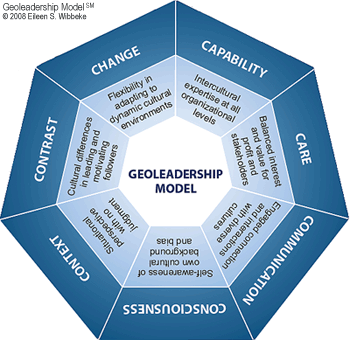
Did you know that that 70% of global business ventures worldwide fail due to mismanagement of cultural differences? While our company quickly grows and continues to expand into various countries and cultures, its vital that global leadership is developed throughout the organization.
Eileen Wibbeke, creator of the GeoLeadership Model, states that in addition to extraordinary business leadership skills, a leader now needs cultural intelligence.
Wibbeke explains, “Learning how to interact in other cultures takes effort beyond just learning another culture’s language. For the American business leader operating in another culture, interaction requires a deeper cultural understanding about how things are done." Read more.
Labels: culture, diversity, global leadership, leadership
People commonly tell me, "We need leadership training." After digging deeper into what they call "leadership training", I find what they're typically looking for is management skill development.
The terms "leadership" and "management" are quite often used interchangeably, but there is a profound difference and both are important to your job today.
I've made my distinction between the two simple:
Of course, to be a good manager one must have many leadership traits. Good leaders are good managers and vice versa. Leadership and management are very much intertwined, so discounting characteristics of one is discounting the importance of the other.
However, they’re more than just intertwined. The combination facilitates your ability to get the resources you need, have the support you need, get the skills you need, build the relationships you need... to get your job done.
Getting an organization "to the next level" or competing in an ever-changing world requires mighty management and enriching leadership... but the true power to make a difference lies with the people that have both: Leadagers.
Let's all be Leadagers.
I'd love to hear your thoughts on management vs. leadership vs. both.
(I attribute the term "leadager" to Miki Saxon of Leadership Turn, 2008)
What do you picture when you hear the word MENTOR? Perhaps someone older than you? Someone with more seniority? More knowledgeable in your field?
What about someone fresh out of college, full of creativity, fresh ideas, and exploring the latest in technology and innovation? What about a friend with a particular aptitude for building relationships and networking? Or a colleague known for a positive management style?
True mentors do not fit into any preconceived mold. They can be anyone who possesses a quality or skill that you would like to improve upon. They can be younger than you, much older, less experienced, more educated, or even working in a completely different field than your own.
Leaders are on a constant quest to improve upon themselves, and recognize that they can learn from a variety of individuals. Don't be afraid to reach out and mentor someone with a different background from you, and don't be surprised when you learn quite a bit from that person, as well.
Labels: diversity, leadership, learning, mentoring, relationships
This past Sunday afternoon, I was faced with a crisis. My father, 52, suffered a heart attack, and luckily we got him to the ER just in the nick of time. My siblings and I were at my parents house when he started feeling ill, and when he said he wanted to go to the hospital, I knew something was really wrong. My father is/WAS a heavy smoker, so it wasn't uncommon for him to complain about chest pain, shortness of breath, and congestion in his lungs. But this time was different.
I'm the oldest & middle child (that's a story for another time), so leadership tends to default to me. My mother is extremely emotional, my younger sister is 8-months pregnant and emotional, and my younger brother is a typical 17-year-old. Until now, my family hadn't really experienced a time when one of us needed to quickly step forward and take action. On Sunday, that someone was me.
Thanks to the Leadership Challenge book, my brain kicked into gear with the "Aviate, Navigate, Communicate" when faced with a crisis. There wasn't time to sit back and ask questions -- we had to get my dad help, fast. I started figuring out what we needed to do, got cars moved out of the driveway, tried to convince my dad he needed an ambulance (he refused), and communicated the intensity of the situation to my family (who were still trying to determine if this was one of his typical bouts of pain). My dad arrived in the ER with only minutes to spare. His heart stopped as they were hooking him up to monitors, and he had to be shocked back to rhythm with the paddles.
My family, especially my mom, did amazingly well in the face of crisis because we were communicating and listening to each other. But sometimes the hardest part of a crisis is dealing with the emotions that were on hold while you got through it. Now the tears are falling, the "I should have..." is being dwelled upon, and we worry about if we'll be able to get him to the ER in time the next time something happens.
From my own experience, I'd say the hardest part of dealing with a crisis is handling the thoughts and emotions that come afterwards. It's vital to acknowledge that emotions are not bad, but don't dwell on the "should'a, would'a, could'a." Make use of the family, friends and coworkers that are there to lend you support, and remember that you're not always going to have 100% of the information you need to make a decision -- sometimes you have to go with your gut and act quickly. Accept that mistakes might be made and there's only so much you can do to prepare for the "what if's." Trust your gut; practice clear, open communication; and hopefully, there won't be a "next time."
Happy Thanksgiving! There's much to be thankful for!!
Labels: crisis, leadership, relationships, trust
The fear of failure comes out in many subtle ways. I often wonder: how many ventures never get off the ground because of this fear? How many classes are not taken? How often do we avoid introducing ourselves to a potential friend, reaching out to someone, trying something new, asking for help, thinking outside the box, or going beyond our comfort level? Being frightened of failure can be the difference between getting started and not, the difference between winning and losing. But failure is a fiction. What occurred over the past is over with, and the only way you can be a failure is if you think you are.
Labels: failure, leadership
The Financial Crisis: How Leaders Face Fear & Find Courage
by Steve Tobak
October 17, 2008 @ 7:00 am
http://blogs.bnet.com
Businesses are run by people. Leaders are people. And, in times of crisis, people feel fear, confusion, anxiety and panic. This post is about how business leaders - effective and aspiring leaders - face crisis.
Read the Article
Labels: crisis, leadership
Respect definitely takes some time to earn, but if you can consistently demonstrate behavior that deserves it, you're on your way to being a respected leader. Here are some easy ways to earn respect:
When you are engaged in a conversation, you need to focus on making the person feel as if they are your top priority. When you genuinely communicate that you value others, you are laying the foundation for a relationship built on trust and respect.
People respect those who have proven that they can be counted on time & again when times are tough.
When leaders have the courage to be who they are by projecting their strengths and improving their weaknesses, they inspire trust, confidence and respect.
Respected leaders are able to praise positive reults, but also able to deliver bad news when it is needed. They don't mince words or water down remarks. They rely upon integrity to communicate with honesty, compassion, sincerity and directness.
Labels: authenticity, leadership, relationships, respect, trust
I hope you answered "being respected" and chances are, many of you did. So why do most people work harder at being liked than they do at earning respect?Like the word "Leader", respect is not something that you are entitled to because of position, title or authority. It is something that you earn. If you have ever had to remind someone that you are in charge; if you have ever had to resort to using the words, "Because I said so" with your kids, or if you have ever wondered why you staff just isn't listening to you, you need to take a step back and ask yourself what you have done to earn their respect.
Think about those people in your life who you respect. They are probably people who you know pretty well. They have opened their authentic selves up to you; shared their beliefs, their values, and their true personalities. And then they have lived accordingly. They have made decisions based upon what they believed was right - instead of what may have been popular. They have been true to themselves and have never attempted to act like someone else or play another part. They have continuously performed up to and surpassed high standards and then set the bar even higher. They have earned your respect over time, displaying consistency in who they are, what they believe and their strong performance.
An authentic leader knows that respect is critical to the ability to effectively lead others. Be authentic and hold fast to your decisions that may not be popular, but are best for the team and company. You will be much better able to influence others and outcomes by diligently earning the respect of others.
Labels: authenticity, leadership, respect
Have you ever wondered how to take that step from "manager" to "leader"? Sometimes it's hard to know exactly what it takes to not just manage people, but inspire them to give you their best performance possible. Here's your first lesson in taking it to that level:
Live It.Leaders must never expect anything more from others than they are willing to deliver themselves. Leaders can only expect high levels of commitment, creativity, innovation, and dedication from others when they themselves are pushing the limits of each one everyday.
Labels: authenticity, leadership
In interviews, Olympic athletes are always asked about their competitors and past accomplishments (or dissapointments). Listen carefully and you'll hear the athlete’s answer focuses not on what needs to be done to out-perform their competition - but what needs to be done to rise to the occasion and surpass their own past personal best.
One of the greatest examples I've heard coming from the Beijing Olympics is from the NBA's Jason Kidd. As he was packing his suitcase for a month on the road with Team USA, he had a decision to make: should he bring along the Olympic gold medal he won eight years ago in Sydney? It's the only gold medal that any of the 12 American players can brag about owning. Kidd pondered whether having that medal dangling in front of them would inspire Team USA to work hard for the gold, or breed jealousy and envy. In the end, he decided to leave the gold medal inside a safe deposit box at a bank in Houston and to start concentrating solely on what lies ahead: The challenge of coming home from Beijing with another gold.
"I didn't want to jinx myself by bringing it and looking at it. I want to play for this: Beijing. I want to play for this gold medal," Kidd told ESPN.com.
This is a phenomenal reminder that as leaders, we must always strive to be better than we were the preceding day, week, month, or year. We must look to the opportunities ahead and focus on what we can do now to do our own personal best.
Labels: leadership